
Our Favorite Places to Play
For a child with autism or sensory needs, finding a park that works is not as simple as finding a park.
Is the playground fenced, or will you spend the whole visit within arm's reach? Is there shade in August? Can a child who uses a wheelchair or walker actually get around it? Will it be too loud by ten in the morning? Those are the questions that decide how a morning goes, and most park guides do not answer them.
We are Metamorphosis ABA Therapy, a BCBA-owned practice providing mobile ABA therapy across Miami-Dade County, in the home, at school, and out in the community. We take children to these parks every week as part of therapy, so we have learned which playgrounds are autism friendly and sensory friendly, which ones work with planning, and which ones are worth skipping depending on your child.
Here is our honest take on each, including the things most guides leave out. If you have a favorite we have missed, we would love to hear about it.
South Pointe Park
At the southern tip of Miami Beach, this is one of the prettiest places to spend a morning in the county. Wide paved paths, ocean views, ships coming into the port, and an accessible playground with a splash area right beside the sand. It is also the park where families of children with autism should think most carefully before going, and that is worth saying plainly up front.
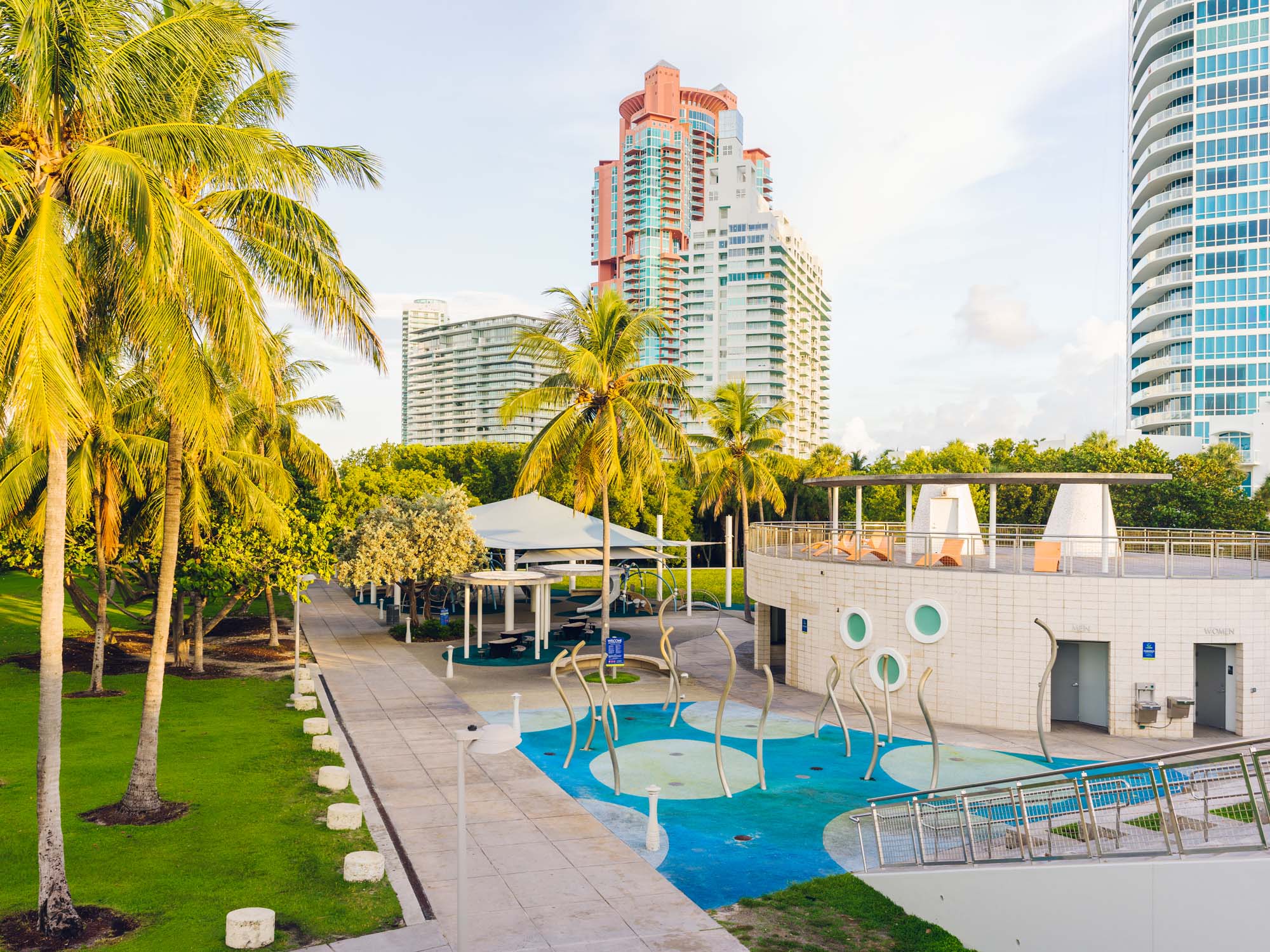
Fenced
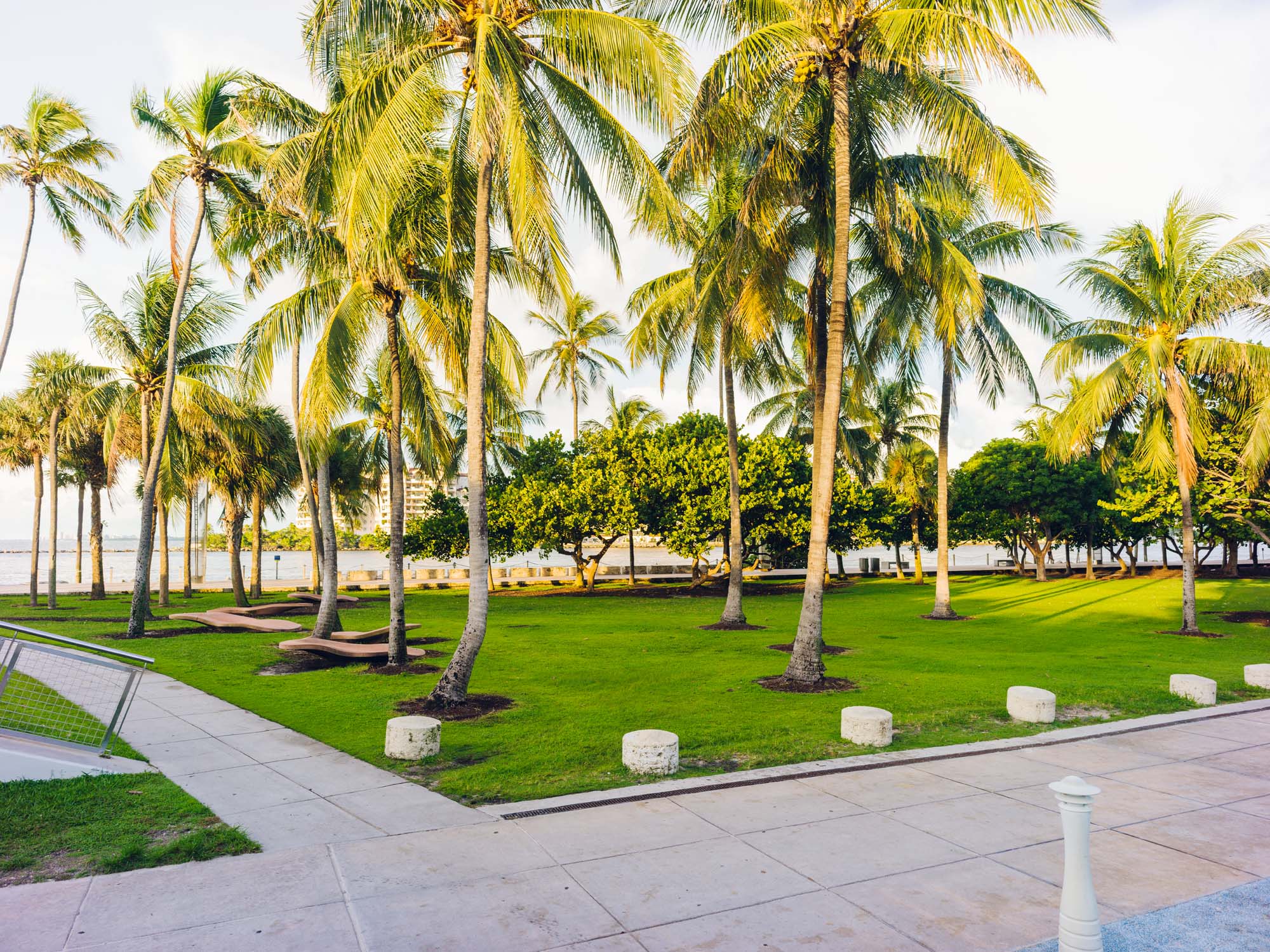
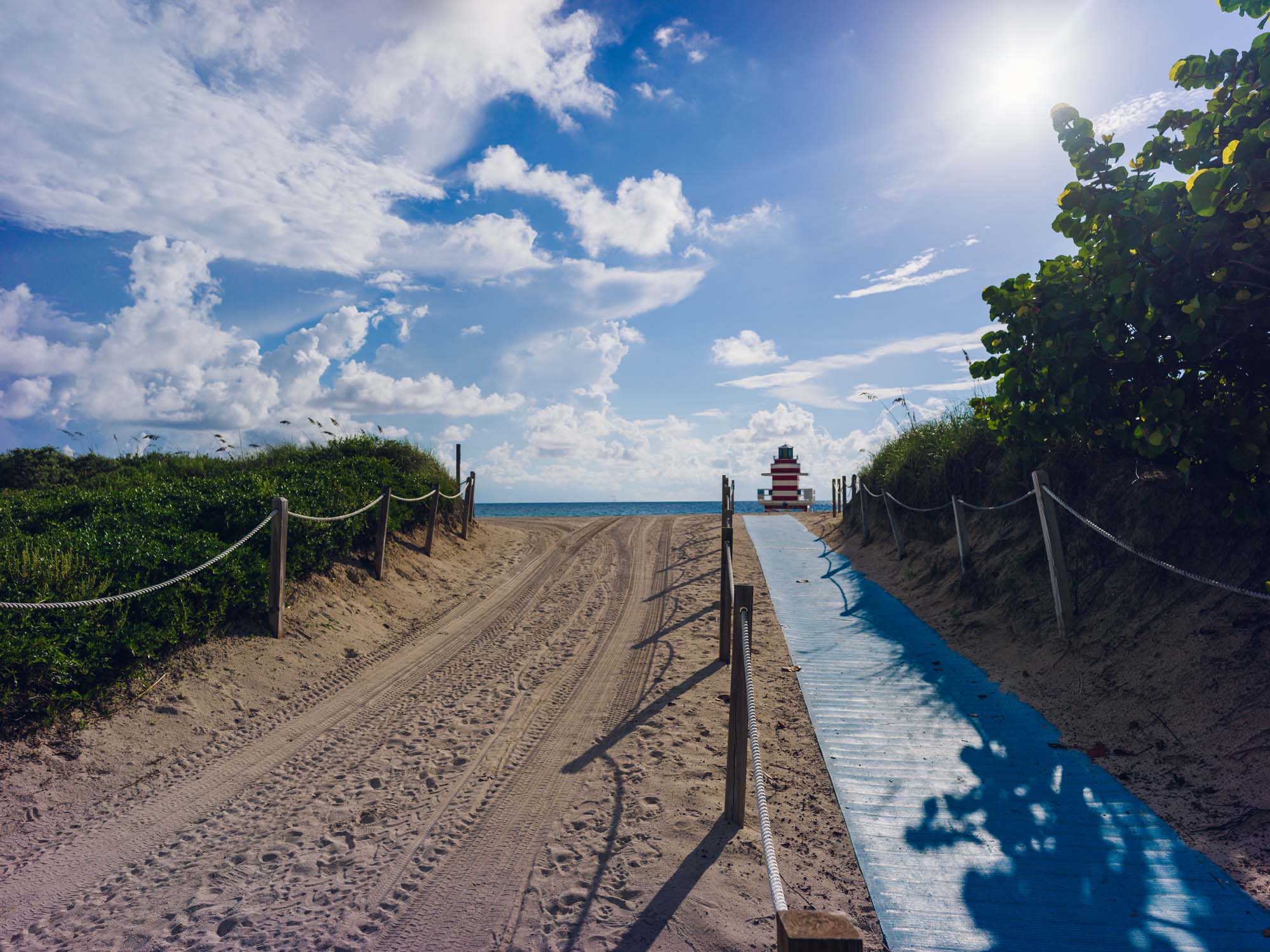
No. No perimeter fencing, and the playground sits directly beside the beach and open water.
Shade
Yes. Shade structures over the playground, plus shaded pavilions and seating nearby.
Surfacing
Poured-in-place rubber. Smooth and even, far easier for wheelchairs, walkers, and unsteady feet than wood chips or sand.
Equipment
Separate areas for ages 2 to 5 and 5 to 12, with slides, climbing and upper body components, and play panels. Listed as accessible by the City of Miami Beach.
Water play
A splash and spray zone built into the playground, with dry play areas alongside it.
Restrooms and water
Public restrooms on site, with water fountains located by them.
Parking
Metered street parking and a garage nearby. Fills quickly on weekends and through the afternoon.
Quiet areas
Not really. The park is open and busy, though the lawns and pier end are calmer than the playground.
Best time to go
Early morning on a weekday. It gets crowded through the afternoon and especially around sunset, and it is often windy.
Also on site
A fishing pier, open lawns, picnic and barbecue areas, and an ADA accessible fitness station along the beach path.
A wonderful sensory experience, and a difficult supervision environment for a child with autism.
Which of those matters more depends entirely on your child.
We would think twice if your child elopes. There is no fencing, and the playground is steps from open water and an unfenced beach. For a child who bolts, this is one of the highest-risk layouts in the county. If you go anyway, bring a second adult, decide who is watching before you get out of the car, and set the boundary with your child at the entrance rather than after they are already running.
The rubber surfacing is a real advantage if your child uses a wheelchair or walker, or is unsteady on their feet. Many Miami playgrounds still use wood chips or sand, which are very hard to move across.
The splash zone can go either way. Some children find it regulating and will happily stay an hour. Others are caught off guard by unpredictable water and noise. If your child is new to splash pads, walk the perimeter first and let them watch before deciding.
Go early if noise is difficult. By mid-morning on a weekend this is a loud, crowded, high-stimulation environment. At eight or nine on a weekday it is a peaceful place.
Good for
Children who enjoy water play, families needing smooth accessible surfacing, and anyone who does better with ocean air and open space than enclosed playgrounds.
Plan carefully for
Children who elope, children sensitive to crowds and noise, and visits without a second adult.
Common questions from Miami parents
Which Miami-Dade playgrounds are fenced?
Fencing matters most for children who elope, and it varies widely across the county. We note it first for every park in this guide. South Pointe Park is not fenced and sits beside open water, so we would not recommend it as a first choice for a child who bolts.
What makes a playground autism friendly or sensory friendly?
Usually a combination of things: secure fencing, quiet or low-stimulation areas to retreat to, shade, predictable layouts, and equipment that offers the kind of sensory input a child seeks, like swinging or spinning. Miami-Dade County Parks has also earned a Certified Autism Center designation, with staff trained in autism and sensory support and designated quiet spaces at select parks.
Are there accessible playgrounds in Miami for children who use wheelchairs?
Yes. The surface matters as much as the equipment. Poured-in-place rubber surfacing, like the kind at South Pointe Park, is far easier to move across than wood chips or sand. We list the surfacing type for every park in this guide.
Does ABA therapy happen at parks?
It can. Our ABA therapy is mobile, so sessions happen wherever your child needs the skill, in the home, at school, or out in the community, including parks. Practicing at a real playground is often far more useful than practicing at a table. If you have questions about how that works for your child, we are glad to talk it through.
← See all the parks in our guide
Questions about your child's needs at the park, or anywhere else?
Metamorphosis ABA Therapy provides bilingual, mobile ABA therapy for children with autism across Miami-Dade County, in the home, at school, and in the community, with no waitlist. We are always glad to talk through what would help your family.